9x Bias Colours are not neutral. The colour white is associated with positivity up to 900% more frequently than black, reflecting deep-seated cultural biases in language.
Even Charter Articles The Even Charter lays the foundation for everything that EVEN stands for today.
Ethnic Groups Even Code is built to recognise the world's many ethnicities without use of inaccurate racist colour-based labels.
Countries/Territories Even Code leverages a comprehensive in-house database, meticulously curated to provide unparalleled depth and accuracy in representing global heritage and identity.
Are You Even?
This is a call to action. This is a call to take the Even Challenge. What is the Even Challenge? For at least 24 hours, pledge to avoid using colour-based naming lables to identify a person or group of people.
Take the ChallengeAbout EVEN
Welcome to EVEN, a pioneering initiative dedicated to fostering equity and unity through the power of inclusive and respectful naming practices. At the heart of our mission lies the Even Charter and the Even Code, which seeks to challenge outdated and divisive terminologies and replace them with language that celebrates individuality and honours cultural heritage.
Our Vision
We envision a world where names are not just labels but expressions of dignity, respect, and shared humanity. By moving beyond simplistic colour-based labels that perpetuate stereotypes and divisions, we aim to cultivate a global society that embraces the rich tapestry of human identity.
Our Mission
- Raising awareness about the impact of harmful naming practices on marginalised communities.
- Advocating for equitable naming conventions that reflect cultural heritage, geographical origins, and individuality.
- Promoting the use of internationally recognised skin tone guides to replace reductive colour-based identifiers.
- Collaborating with individuals, organisations, and governments to establish and implement the principles of the Even Charter.
Why We Exist
For generations, language has played a powerful role in shaping perceptions, relationships, and societal norms. Terms like "black" and "white" carry historical baggage and unequal connotations that hinder true equality. EVEN challenges these paradigms, providing a framework for respectful representation that transcends superficial labels.
The EVEN Charter
The Even Charter is the result of countless iterations and refinements, reflecting our unwavering commitment to equity and justice. It not only dismantles the current racist colour-based naming paradigm but also lays the foundation for everything that EVEN stands for today. The principles outlined in the Even Charter serve as a guide for creating a more inclusive, respectful, and equitable world.
Join Us
EVEN is more than a movement; it’s a call to action. Together, we can create a world where naming practices honour the diversity and complexity of human identity. Through education, advocacy, and collaboration, we strive to build a future where equity is not just an aspiration but a reality. Let’s move beyond labels and embrace identities that unite us. Together, we are EVEN.
Team EVEN
Meet the co-authors of the Even Charter and cofounders of EVEN.
Andrew Hall & Luke Patterson
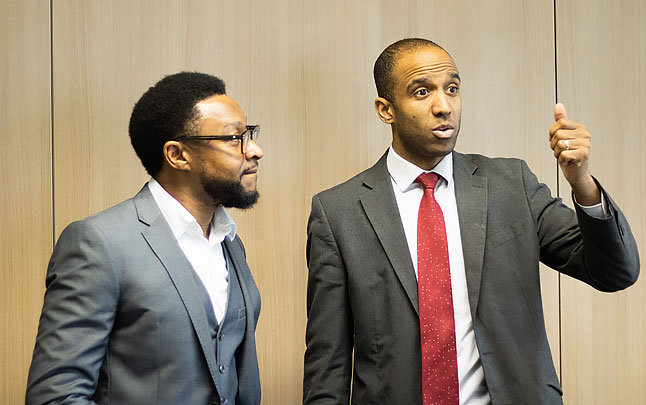
Andrew Hall and Luke Patterson are the co-authors of the Even Charter and cofounders of EVEN. Together, they lead the work on equitable naming conventions and inclusive dialogue.
With over 35 years of combined experience across Primary and Secondary education, their questioning of colour-based naming paradigms began more than a decade ago while teaching together at a British International School in Jordan.
A defining moment during an encounter in the Old City of Jerusalem crystallised their thinking and led to the foundation of the Even Charter.
Our Services
Explore the diverse services we offer to promote equity, education, and collaboration.
-
Even Code Issuing Service
A free and anonymous service for individuals to generate their personal identity code.In parallel, we will advocate for governments and recruitment organisations worldwide to adopt the Even Code as the standard tool for equitable and accurate diversity monitoring.
-
Staff Training
Workshops designed to educate and empower teams on cultural sensitivity and equity.
-
Reconciliation
Collaborative approaches to address and resolve cultural and societal disparities.
-
Workshops
Interactive sessions focused on promoting unity and understanding through dialogue.
-
Conferences
Large-scale events bringing together thought leaders to advance our shared mission.
Even Code
A shared ethnicity coding standard, designed for consistent reporting and better understanding of ethnicity patterns.
The Even Code Issuing Service is a simple, standardised tool for generating a compact code that can represent up to five identity references, plus an optional skin tone and eye colour. It is designed to be easy to issue, easy to decode, and easy to integrate into existing systems.
What the service does
- Create an Even Code by selecting up to 5 identity references.
- Choose a skin tone and eye colour using visual thumbnails.
- Decode an existing Even Code to view the references it represents.
- Copy the code or generate a QR code for quick sharing.
Who it is for
Organisations that need a clear, consistent, and respectful way to capture identity information for reporting, safeguarding, service delivery, or operational workflows.
Start now
Use the Even Code Issuing Service to generate or decode an Even Code.
Start nowYou can also read the Even Charter.
Testimonials
Hear from people of action who have experienced the impact of the Even Charter, participated in one of our Even workshops, taken the Even Challenge, or embraced the Even Code:
Frequently Asked Questions
Find answers to common questions about the Even Charter, its principles, and its implementation.
What is the Even Charter?
The Even Charter outlines principles and guidelines for achieving equity via equal naming. It rejects outdated, colour-based labels such as "black" and "white," advocating for a more inclusive approach to describing individuals based on geographical identity and heritage.
What colour-based naming labels does the Even Charter aim to replace?
The Even Charter advocates replacing colour-based labels like "black" and "white" with terms that accurately reflect geographical and cultural identities, such as "African," "European,", "Scottish", "Caribbean," or "Asian." For instances where skin tone information is required for lawful purposes, it supports the use of the Even Code or an internationally recognised skin tone guide to ensure fairness and consistency.
Additionally, the Charter addresses the use of terms like "political black" by some organisations. It encourages the adoption of labels that reflect the organisation’s values and causes, ensuring inclusivity for individuals who share their mission but may not identify with colour-based labels. This approach avoids unintentionally favouring individuals who align with the label but may not share the organisation’s goals or principles.
What is the Even Code?
The Even Code is the operational heritage and identity framework of the Even Charter that includes up to five ethnic identities, detailed skin tone references, and eye colours, providing an inclusive alternative to outdated monitoring systems. Click here to see an Even Code example.
How does accreditation work under the Even Charter?
Accreditation under the Even Charter involves adherence to its principles and guidelines. Organisations can align their naming conventions with the charter's recommendations and participate in training and consultation provided by EVEN. This process ensures that their practices promote equity and inclusivity.
Why does the Even Charter reject colour-based labels?
The Even Charter rejects colour-based labels because they are simplistic and often carry negative or positive biases rooted in historical and Western societal contexts. These labels perpetuate division and stereotypes. Replacing them with terms based on geographical and cultural identities fosters respect and equity.
What does "Equity Via Equal Naming" mean?
"Equity Via Equal Naming" is the central principle of the Even Charter. It advocates for naming conventions that respect individuals' identities by using accurate and equitable terms rooted in their cultural and geographical heritage, rather than reductive colour-based labels.
What examples illustrate the Even Charter's recommended naming approach?
Instead of using terms like "black people," the Even Charter recommends descriptors such as "African," "Nigerian," or "African-Caribbean," depending on the individual's heritage. Similarly, "white people" could be replaced with terms like "European," "British," or "German."
How will the Even Charter be implemented globally?
The Even Charter's global implementation involves collaboration with governments, cultural experts, advocacy groups, and communities. EVEN plans to promote awareness, provide training, and encourage the adoption of its principles through partnerships and pilot programs.
Does the Even Charter recognise individuals' self-identified ethnicities?
Yes, the Even Charter emphasises the importance of self-identification. Individuals should have the freedom to describe their ethnicity in their own terms rather than being confined to predefined categories.
What is the Even Challenge?
The Even Challenge is a commitment made by individuals and organisations to uphold the principles of the Even Charter. By taking the challenge, participants pledge to promote equity via equal naming, reject colour-based labels, and adopt inclusive and respectful language in their practices and communications for at least 24 hours.
Contact
We also welcome your questions, feedback, and collaborations. Reach out to us to join the movement for equity and inclusivity.
Address
Regal House, Twickenham. London. UK
Email Us
info@iEven.org